Introduction: A Developer’s Journey to the Right Windows
Imagine this scene. A skilled coder sits down at a brand new laptop. The box is open. The excitement is real. But then, the setup begins. Hours pass by. Drivers need installing. Tools must be configured. The simple act of starting a project feels like climbing a mountain. This story is common. Many developers face this exact problem every single day.
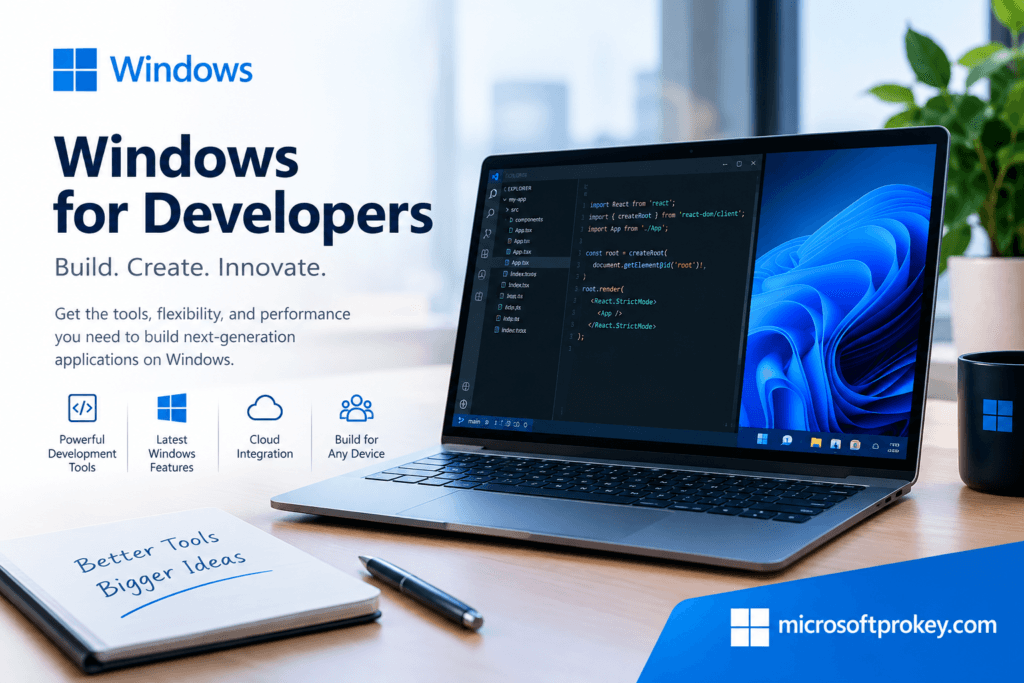
Therefore, choosing the right operating system matters more than ever before. Windows for Developers has evolved dramatically over the years. It is no longer just a platform for .NET work. Today, it supports web development, AI projects, mobile apps, and cloud engineering. Consequently, picking the correct edition saves time and money. This guide will walk you through every important choice. Moreover, it will help you avoid common mistakes. Let us begin this journey together.
Why Windows for Developers Is a Smart Choice in 2026
Windows for Developers has become a powerhouse platform. It supports a massive range of tools and languages. You can write Python code. You can build Node.js applications. You can develop C# projects. Furthermore, you can run Linux containers natively. This flexibility makes Windows for Developers very attractive. Many companies now use it as their primary development environment.
Additionally, Microsoft has invested heavily in developer experience. The company released tools like Dev Home and Dev Drive. These tools speed up daily workflows. They reduce setup time significantly. Consequently, Windows for Developers competes strongly with macOS and Linux. In fact, it often wins on hardware variety and price. You can buy a Windows laptop for far less than a MacBook Pro. Therefore, Windows for Developers offers excellent value for money.
The Big Picture: Windows Editions for Developers Explained
Microsoft sells several Windows editions. Each one targets different users. Understanding these differences is critical. Windows for Developers should focus on professional-grade options. The Home edition is too limited for serious coding work. It lacks important features like Hyper-V and BitLocker. Therefore, developers should avoid Home edition entirely.
Windows Pro sits in the middle of the range. It includes virtualization tools. It supports Remote Desktop hosting. It allows Group Policy management. These features matter for professional work. Consequently, Windows for Developers usually choose Pro as their starting point. Enterprise edition adds even more security and management features. However, Enterprise requires a volume license. Most individual developers cannot easily buy it. Therefore, Pro remains the sweet spot for Windows for Developers.
Windows 11 Pro: The Sweet Spot for Most Coders
Windows 11 Pro delivers everything a developer needs. Firstly, it includes Hyper-V for virtual machines. You can run multiple operating systems on one PC. Secondly, it offers Windows Sandbox for safe testing. This feature creates a clean, disposable environment. You can test risky software without harming your main system. Thirdly, it supports BitLocker encryption. This protects your code and data from theft.
Furthermore, Windows 11 Pro supports Dev Drive. This special storage volume boosts file system performance. It uses the ReFS format for faster builds. Developers who compile large projects see real gains. In addition, Pro allows Remote Desktop connections. You can access your development machine from anywhere. This flexibility is invaluable for modern work. Therefore, Windows 11 Pro is the top recommendation for Windows for Developers.
Windows 11 Enterprise: When You Need More Power
Windows 11 Enterprise targets large organizations. It adds advanced security features. Windows Defender Advanced Threat Protection is included. This tool protects against sophisticated cyber attacks. It also offers longer support periods. Pro editions get 24 months of support. Enterprise editions receive 36 months. This extra time matters for stability-focused teams.
However, Enterprise edition has drawbacks. It requires a volume licensing agreement. Individual developers cannot simply buy it online. Therefore, most freelancers and small teams skip it. Large companies with IT departments benefit most. They can manage hundreds of devices efficiently. Consequently, Windows for Developers in enterprise settings rely on this edition. But for everyone else, Pro is more practical and affordable.
Windows 11 Home: Why Developers Should Avoid It
The Home edition looks tempting at first. It costs less money than Pro. It runs the same core Windows kernel. Therefore, some developers wonder if they can save cash. Sadly, Home edition blocks essential features. You cannot use Hyper-V for virtualization. You cannot enable BitLocker for encryption. You cannot host Remote Desktop sessions.
Moreover, Home edition forces Microsoft Account usage. This requirement reduces privacy and control. It also includes more bloatware and promotional apps. These extras slow down your system. They distract from productive work. Consequently, Windows for Developers should never choose Home edition. The small savings are not worth the lost functionality. Always upgrade to Pro for serious development work.
Understanding Licensing: Retail, OEM, and Volume Options
Licensing confuses many developers. Three main types exist. Retail licenses are the most flexible. You can move them between computers. You own the license forever. OEM licenses are cheaper but restrictive. They lock to the first motherboard they activate on. You cannot transfer them to a new PC. Therefore, OEM works for pre-built machines but limits future upgrades.
Volume licensing serves businesses and organizations. It requires a formal agreement with Microsoft. This option suits teams of five or more users. It simplifies management across many devices. Additionally, Visual Studio Subscriptions include Windows licenses. An active Visual Studio Professional or Enterprise subscription grants access. You can use Windows for development and testing. This benefit can save significant money. Therefore, check your subscription status before buying separately.
Visual Studio Subscriptions: A Hidden Licensing Goldmine
Visual Studio Subscriptions offer incredible value. Many developers overlook this option. An annual subscription costs a few hundred dollars. In return, you receive Windows licenses. You also get access to Microsoft Office. You receive Azure credits every month. These credits let you test cloud services affordably. Furthermore, you gain access to development tools and SDKs.
The Windows license included in these subscriptions is for development use. You cannot use it as your primary daily driver. However, you can install it on test machines. You can run it in virtual environments. This flexibility is perfect for Windows for Developers who test across platforms. Consequently, evaluate subscription costs against standalone license purchases. Often, the subscription pays for itself quickly.
How to Buy Windows for Developers Licenses Safely
Buying Windows licenses requires caution. Many shady sellers exist online. They offer prices that seem too good. A genuine Windows 11 Pro license costs around $199. If a seller asks for $10, be suspicious. These cheap keys often come from stolen corporate accounts. They may work initially. Then, they deactivate without warning. You lose your money and your activation.
Therefore, always buy from authorized retailers. Microsoft’s official store is the safest choice. Major electronics retailers also sell genuine licenses. Amazon and Newegg are reliable options. They sell retail and OEM versions. Additionally, check the seller’s reputation carefully. Look for verified reviews and return policies. A little caution now prevents big headaches later. Protect your investment in Windows for Developers by buying legitimately.
Exploring Windows for Developers: Free and Low-Cost Alternatives
Not every developer can afford a full license immediately. Fortunately, some free options exist. Windows 11 Enterprise Evaluation offers a 90-day trial. You can test all features without paying. This trial helps you decide which edition suits your needs. After 90 days, you must activate or reinstall. Another option is the Windows Insider Program. This program provides early builds for free. However, these builds may contain bugs. They are not suitable for production work.
Students often qualify for free or discounted licenses. Many universities participate in Microsoft’s education programs. Check with your school’s IT department. Additionally, some employers provide Windows licenses as a work benefit. Ask your manager or IT team. Therefore, explore all possibilities before paying full price. Windows for Developers does not have to break your budget.
Project Zenith: The Future of Windows for Developers
Microsoft announced Project Zenith in September 2026. This project creates a special Windows 11 configuration. It targets developers specifically. The goal is simple: reduce setup time to zero. You turn on the machine. You start coding immediately. No driver installations. No tool configurations. Everything works out of the box.
Project Zenith requires powerful hardware. It needs at least 64 GB of unified memory. It demands 250 GB/s of memory bandwidth. These requirements support local AI models. Developers can run large language models directly on their machines. The first devices use AMD’s Ryzen AI Halo platform. They cost around $4,000. This price targets professional developers and AI researchers. Consequently, Project Zenith represents the future direction of Windows for Developers. However, mainstream adoption will take time.
Essential Features Every Windows Developer Needs
Several features make Windows great for coding. First, the Windows Subsystem for Linux (WSL 2) is essential. It runs a real Linux kernel inside Windows. You can use Ubuntu, Fedora, or other distributions. Performance is impressive. WSL 2 runs at nearly 95 percent of native Linux speed for CPU tasks. You can run Docker containers seamlessly.
Second, Dev Drive revolutionizes build performance. This ReFS-based storage volume optimizes file operations. Visual Studio builds run faster. Large project compilations finish sooner. Third, Windows Sandbox provides safe testing. You can run suspicious code without risk. The sandbox isolates everything from your main system. Fourth, Dev Home offers a centralized dashboard. It monitors your projects and system resources. These features make Windows for Developers genuinely productive.
Setting Up Your Ideal Development Environment
Setting up Windows for Developers requires planning. Start with a clean installation. Choose Windows 11 Pro as your base. Enable Developer Mode in Settings. This unlocks sideloading and debugging tools. Next, create a Dev Drive partition. Allocate at least 50 GB for this volume. Install your projects and build caches there. You will notice faster build times immediately.
Then, install WSL 2 with your preferred Linux distribution. Set up Git and configure your SSH keys. Install Visual Studio Code or your favorite IDE. Add the extensions you need daily. Finally, configure Windows Terminal for a better command-line experience. These steps create a powerful development machine. Consequently, Windows for Developers becomes a joy to use daily.
Optimizing Performance for Coding Workflows
Performance matters for developer productivity. Several Windows settings improve speed. First, disable unnecessary startup programs. They slow down boot times. Second, adjust visual effects for performance. Right-click This PC and open Properties. Click Advanced System Settings. Choose Adjust for Best Performance. This reduces graphical overhead.
Third, configure Windows Update active hours. Updates should not interrupt your work. Fourth, use Dev Drive for all project files. ReFS optimizes file operations dramatically. Fifth, increase WSL 2 memory allocation if needed. Create a .wslconfig file in your user folder. Set memory limits based on your RAM. Sixth, keep your GPU drivers updated. This helps with AI workloads and rendering. These tweaks make Windows for Developers run smoothly.
Common Mistakes to Avoid When Buying Windows
Many developers make costly mistakes. First, buying Home edition saves a little money. It costs you essential features later. Always choose Pro for development work. Second, purchasing suspiciously cheap keys leads to trouble. These keys often fail after weeks. You waste time and money. Third, ignoring licensing terms creates legal risks. Read the fine print carefully.
Fourth, buying OEM licenses for custom PCs limits upgrades. OEM licenses lock to the first motherboard. You cannot transfer them. Fifth, overlooking Visual Studio Subscription benefits wastes money. Check if your subscription includes Windows licenses. Sixth, forgetting about future needs causes regret. Buy the best edition you can afford now. Consequently, Windows for Developers should plan for growth and changing requirements.
Microsoftprokey: A Trusted Source for Windows Licenses
Finding genuine Windows licenses at fair prices is challenging. Many developers turn to Microsoftprokey for reliable solutions. This platform offers authentic Windows keys for developers and businesses. They provide Windows 11 Pro licenses at competitive rates. Every key is genuine and activates properly. You avoid the risks of stolen or grey-market keys.
Moreover, Microsoftprokey offers excellent customer support. If activation fails, they help you resolve the issue. Their team understands developer needs. They know you cannot afford downtime. Therefore, they prioritize quick responses. Additionally, their pricing beats many authorized retailers. You save money without sacrificing legitimacy. For Windows for Developers seeking safe, affordable licenses, Microsoftprokey is worth considering. Visit https://microsoftprokey.com/ to explore their offerings.
Future-Proofing Your Windows Development Setup
Technology changes rapidly. Your Windows setup should adapt. First, choose hardware with upgrade potential. More RAM and faster SSDs improve performance. Second, keep your Windows edition current. Feature updates bring new developer tools. Third, embrace cloud integration. Azure and GitHub work seamlessly with Windows.
Fourth, learn PowerShell and Windows Terminal. These tools boost productivity. Fifth, explore AI-assisted coding tools. GitHub Copilot integrates directly into Visual Studio Code. Sixth, participate in the Windows Insider Program. Early access lets you test new features. Consequently, Windows for Developers who stay current gain advantages. They work faster and solve problems more effectively.
Conclusion: Your Path to the Perfect Windows Setup
Choosing Windows for Developers is a wise decision in 2026. The platform supports every major programming language. It runs Linux tools natively through WSL 2. It offers powerful virtualization with Hyper-V. It provides security through BitLocker. These features create a complete development environment. However, the right edition matters greatly.
Windows 11 Pro is the best choice for most developers. It balances cost with essential features. Enterprise edition serves large organizations. Home edition falls short for serious work. Licensing requires careful attention. Retail licenses offer flexibility. OEM licenses save money but limit transfers. Visual Studio Subscriptions provide hidden value. Always buy from trusted sources. Avoid suspiciously cheap keys. They lead to problems later. Microsoftprokey offers a reliable alternative for genuine licenses. Invest in quality. Your productivity depends on it. Finally, keep learning and adapting. Windows for Developers continues to evolve. Stay curious. Stay productive. Your perfect setup awaits.
FAQ’s
Question 1: Which Windows edition is best for developers?
Windows 11 Pro is the best choice for most developers. It includes Hyper-V, BitLocker, and Windows Sandbox. These features are essential for professional work. Home edition lacks these tools. Enterprise edition adds more security but requires volume licensing. Therefore, Pro offers the best balance of features and price for Windows for Developers.
Question 2: Can I use Windows Home for coding?
You can write code on Windows Home. However, you cannot use Hyper-V for virtualization. You cannot enable BitLocker encryption. You cannot host Remote Desktop sessions. These limitations hurt productivity. Therefore, Windows for Developers should upgrade to Pro. The extra cost is worth the functionality.
Question 3: How much does Windows 11 Pro cost?
The official retail price is around $199. OEM versions cost less, usually $139 or so. However, OEM licenses lock to one motherboard. Sales sometimes offer Pro licenses for $30 to $50. Be careful with extremely cheap keys. They may be stolen or invalid. Always buy from authorized sellers for Windows for Developers.
Question 4: What is Project Zenith?
Project Zenith is a special Windows 11 configuration for developers. Microsoft announced it in September 2026. It comes pre-configured with development tools. It requires at least 64 GB of RAM. It targets AI developers and professional coders. The first devices cost around $4,000. This project shows Microsoft’s commitment to Windows for Developers.
Question 5: Is WSL 2 good for professional development?
Yes, WSL 2 is excellent for professional work. It runs a real Linux kernel inside Windows. Performance reaches about 95 percent of native Linux speed. You can run Docker containers seamlessly. You can use Linux tools without leaving Windows. Consequently, WSL 2 makes Windows for Developers a first-class Linux development platform.