Introduction
Windows Security Features have come a long way in recent years. Microsoft has built powerful protection directly into Windows 11. Many people still wonder if they need extra antivirus software. The answer depends on how you use your computer. This Windows Security Features buying guide will help you make the right choice. We will explore every built-in tool and explain what each one does. We will also compare free options with paid alternatives. By the end, you will know exactly what protection you need. You will also understand where to get the best deals on genuine software. Let us dive into the world of Windows Security Features together.
What Are Windows Security Features?
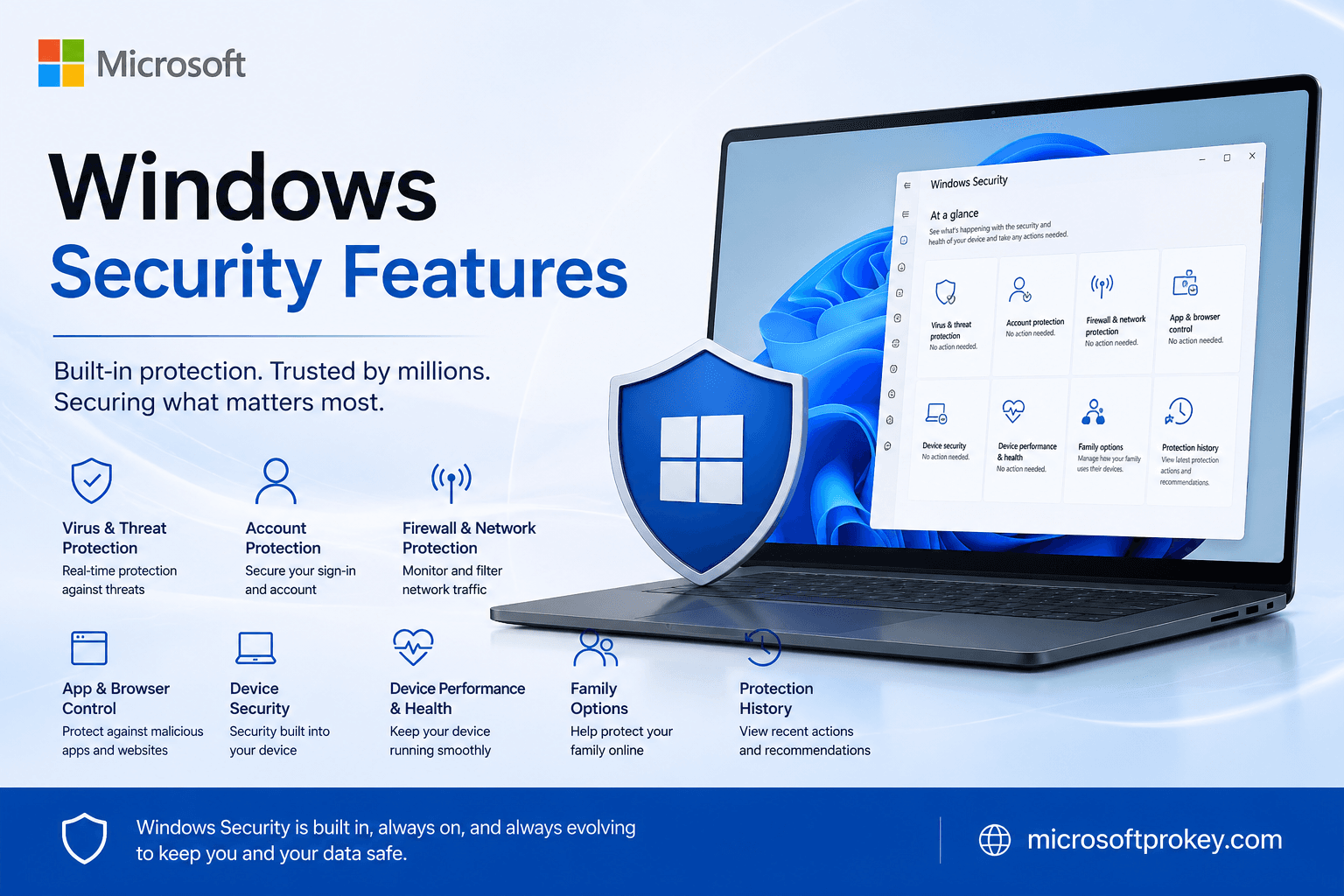
Windows Security Features are a collection of built-in protection tools. Microsoft includes these tools in every Windows 11 installation. They work together to shield your device from harm. These features cover everything from viruses to phishing scams. They also protect your files from ransomware attacks. The main components include Microsoft Defender Antivirus and a powerful firewall. SmartScreen filters out dangerous websites and downloads. Account protection tools like Windows Hello keep your identity safe. Device security features use hardware to block low-level threats. All these Windows Security Features operate from a single dashboard. You can find this dashboard by searching “Windows Security” in your start menu. Understanding these features is the first step to better protection. This Windows Security Features buying guide will explain each component clearly.
Why You Need to Understand Windows Security Features
Cyber threats are more common than ever before. Hackers constantly look for ways to steal your data. They use viruses, ransomware, and phishing to attack your system. Your personal information is valuable to these criminals. Bank details, passwords, and photos are all at risk. Without proper protection, you could lose everything. Windows Security Features provide a strong defense against these threats. They are always on and always updating. Microsoft releases new threat definitions daily. This means your protection stays current without any effort. Understanding Windows Security Features helps you use them effectively. Many people leave these tools disabled without realizing it. Others do not know how to adjust settings for better safety. This guide will show you how to maximize your protection. Knowledge is your first line of defense in the digital world.
Microsoft Defender Antivirus – The Core of Windows Security Features
Microsoft Defender Antivirus is the heart of Windows Security Features. It runs automatically in the background at all times. This tool scans every file you open or download. It checks for known viruses, malware, and spyware. Defender also monitors running processes for suspicious behavior. If it finds something dangerous, it acts immediately. It can quarantine, block, or remove the threat. Defender uses cloud-based intelligence to catch new threats. This means it learns about new viruses very quickly. Most users never need to interact with Defender at all. It simply works without getting in your way. You can adjust its settings if you want more control. However, Microsoft recommends leaving default settings alone. Defender is one of the most important Windows Security Features you have. It provides real-time protection that never sleeps. For most people, Defender is more than enough protection.
SmartScreen – A Key Part of Windows Security Features
SmartScreen is another vital component of Windows Security Features. It protects you from dangerous websites and downloads. This tool uses reputation-based signals to identify threats. It checks websites against a constantly updated list. If a site is known for phishing, SmartScreen blocks it. It also warns you about suspicious downloads. Many malicious files never reach your computer because of SmartScreen. This feature works seamlessly with Microsoft Edge browser. It also protects other apps that access the internet. SmartScreen is one of those Windows Security Features you barely notice. It only appears when it needs to warn you about danger. This makes it very user-friendly and non-intrusive. SmartScreen also helps protect against potentially unwanted applications. These are programs that may slow down your PC or show ads. By using SmartScreen, you add an extra layer of safety. It is a silent guardian in your security setup.
Smart App Control – Another Essential Windows Security Feature
Smart App Control is a newer addition to Windows Security Features. It prevents untrusted apps from running on your system. This tool checks if an app is properly signed and known. If the app does not meet safety standards, it gets blocked. Smart App Control works differently from standard antivirus. It focuses on application trust rather than malware signatures. This makes it very effective against new and unknown threats. Many zero-day attacks are stopped by this feature. Smart App Control runs in the background without interrupting you. It only acts when you try to launch a suspicious program. You can choose to turn it on or off in settings. Microsoft recommends keeping it enabled for maximum safety. This feature is especially useful for less tech-savvy users. It prevents accidental installation of dangerous software. Smart App Control is a valuable part of Windows Security Features.
Ransomware Protection – A Critical Windows Security Feature
Ransomware is one of the most dangerous threats today. Hackers use it to encrypt your files and demand payment. Windows Security Features include strong ransomware protection. This feature is called Controlled Folder Access. It prevents unauthorized apps from changing your files. Only trusted programs can write to protected folders. This blocks ransomware from encrypting your documents. You can add specific folders to the protection list. Your Desktop, Documents, and Pictures folders are protected by default. You can also grant exceptions for trusted apps. This flexibility makes the feature very useful. Ransomware protection is one of the most important Windows Security Features. It can save you from paying large ransoms. Many people do not even know this feature exists. Make sure it is enabled in your Windows Security settings. It could be the difference between safety and disaster.
Firewall and Network Protection in Windows Security Features
The Windows Defender Firewall is a crucial network protection tool. It monitors all incoming and outgoing internet traffic. This firewall blocks unauthorized connections to your PC. It prevents hackers from accessing your system remotely. The firewall has different profiles for different networks. Public networks get stricter rules than private ones. You can also create custom rules for specific apps. This gives you fine-grained control over your network security. The firewall works silently in the background most of the time. It only alerts you when something unusual happens. Network protection is a key part of Windows Security Features. It helps prevent lateral movement by attackers. This means a compromised device cannot easily infect others. The firewall is always on by default in Windows. You should never disable it unless you have a good reason. It is one of your most important defense layers.
BitLocker – Data Encryption in Windows Security Features
BitLocker is a powerful encryption tool in Windows Security Features. It protects your data if your device is lost or stolen. BitLocker encrypts your entire hard drive. This means no one can read your files without the key. Even if someone removes the drive from your PC, they cannot access it. BitLocker uses the Trusted Platform Module (TPM) for security. The TPM stores your encryption keys safely. You can also add a PIN or startup key for extra protection. BitLocker is available on Windows Pro and Enterprise editions. Home users may have Device Encryption instead. This is a simpler version that uses BitLocker technology. Encryption does not protect files after you log in. So always lock your computer when you step away. BitLocker is one of the most important Windows Security Features for laptops. It gives you peace of mind if your device goes missing.
Windows Hello – Identity Protection in Windows Security Features
Windows Hello is a modern identity protection tool. It lets you sign in without a password. You can use your face, fingerprint, or a PIN. This is much more secure than traditional passwords. Passwords can be stolen, guessed, or hacked. Biometric data is unique to you and hard to fake. Windows Hello uses special hardware for facial recognition. This hardware is built into many modern laptops and webcams. The system stores your biometric data securely on your device. It never sends this data to the cloud. This keeps your identity information safe from hackers. Windows Hello is a key part of Windows Security Features. It also supports FIDO2 security keys for added protection. These keys provide phishing-resistant authentication. Using Windows Hello makes your accounts much safer. It also makes logging in faster and more convenient.
Device Security and Core Isolation in Windows Security Features
Device security features use hardware to protect your system. These include Secure Boot and Trusted Platform Module (TPM). Secure Boot ensures only trusted software loads during startup. This prevents rootkits and bootkits from infecting your PC. TPM provides a secure place for encryption keys and credentials. Core Isolation is another important hardware-based feature. It uses virtualization to separate sensitive processes. This makes it harder for malware to access critical system areas. Memory Integrity is a key part of Core Isolation. It prevents malicious code from running in high-security memory regions. These Windows Security Features require compatible hardware. Most modern PCs support these technologies. You can check your device security status in the Windows Security app. Enabling these features adds a strong hardware-level defense. They protect against attacks that software alone cannot stop. Device security is the foundation of all Windows Security Features.
Account Protection – Essential Windows Security Features
Account protection tools keep your login credentials safe. They include features like Dynamic Lock and Credential Guard. Dynamic Lock automatically locks your PC when you walk away. It uses a Bluetooth device like your phone to detect your presence. This prevents unauthorized access when you forget to lock your screen. Credential Guard uses virtualization to protect your login info. It stores credentials in an isolated environment. This makes it very hard for attackers to steal them. Account protection also includes sign-in options and recommendations. Windows will suggest ways to improve your account security. These Windows Security Features are often overlooked. Yet they provide excellent protection against identity theft. Enabling them takes just a few clicks. The benefits far outweigh the small effort required. Account protection is a vital part of your overall security posture.
Family Options and Parental Controls in Windows Security Features
Windows Security Features also include family safety tools. These help parents protect their children online. You can set screen time limits for each family member. This helps prevent excessive device usage. You can also filter inappropriate websites and apps. Microsoft Edge supports safe search to block adult content. Parents can view activity reports for their children. These reports show which sites and apps were used. You can also set spending limits in the Microsoft Store. Family options are easily accessible from the Windows Security app. They integrate with your Microsoft account for seamless management. These Windows Security Features give parents peace of mind. They ensure children stay safe while using the internet. Setting up family safety is quick and straightforward. It is one of the most practical Windows Security Features for families.
Windows Security Features vs Third-Party Antivirus
Many people wonder if Windows Security Features are enough. The answer depends on your specific needs. For most home users, built-in protection is sufficient. Microsoft Defender performs well in independent tests. It catches most common viruses and malware. It also updates automatically without any user effort. However, third-party antivirus software offers extra features. These include VPNs, password managers, and parental controls. Some suites provide more advanced threat detection. They may also offer better customer support. Power users and businesses might benefit from these extras. But they come at a cost, both in money and system resources. Third-party software can slow down your PC. It can also cause conflicts with Windows Security Features. You should carefully evaluate your needs before buying. This Windows Security Features buying guide helps you make that decision. Remember, the best protection is the one you actually use.
How to Buy Genuine Windows Security Software
Buying genuine software is crucial for your security. Fake or pirated software can contain malware. It may also lack important security updates. Always purchase from official sources or authorized resellers. Microsoft offers Windows 11 Pro with all security features included. You can buy a license key from trusted vendors. Microsoftprokey is a reliable source for genuine Windows keys. They offer competitive prices and instant delivery. Always verify the seller’s reputation before purchasing. Read reviews and check for customer feedback. Avoid deals that seem too good to be true. They often are scams or illegitimate keys. Genuine software ensures you get all Windows Security Features. It also guarantees you receive regular updates. These updates are essential for staying protected. Investing in genuine software is investing in your safety.
Conclusion
Windows Security Features provide a robust defense against modern threats. Microsoft has built an impressive suite of tools into Windows 11. These tools cover everything from antivirus to encryption. They protect against viruses, ransomware, phishing, and more. Most users will find these built-in features more than adequate. They are free, always updated, and easy to use. They also have minimal impact on system performance. However, some users may want extra features. Third-party antivirus suites offer VPNs and password managers. They may also provide advanced parental controls. Power users and businesses might benefit from these extras. But they come with additional costs and resource usage. You should assess your personal risk level before buying. Consider how you use your computer and what data you store. Also think about your budget and technical skills. For most people, Windows Security Features are the best choice. They offer excellent protection without any extra cost. If you do decide to buy third-party software, choose wisely. Purchase from trusted sources to avoid scams. Genuine software is essential for maintaining security. Remember to keep your Windows updated at all times. Updates include critical security patches. They also improve existing Windows Security Features. Enable all the built-in protection tools. Do not disable features without understanding the risks. Use strong, unique passwords for all your accounts. Consider using Windows Hello for passwordless sign-in. Back up your important files regularly. This protects you even if ransomware strikes. Stay informed about new threats and security practices. Your digital safety depends on your knowledge and actions. Windows Security Features give you a strong foundation. Build on that foundation with good habits. You can stay safe online with the right approach.
FAQ’s
Q1: Are Windows Security Features enough to protect my PC?
Yes, for most home users, Windows Security Features provide excellent protection. Microsoft Defender Antivirus, SmartScreen, and the built-in firewall work together to block threats. However, power users and businesses may want extra features like VPNs or advanced parental controls.
Q2: How do I access Windows Security Features on my computer?
You can access Windows Security Features by typing “Windows Security” in the start menu search bar. Click on the app to open the dashboard. From there, you can view and manage all protection settings.
Q3: Do Windows Security Features slow down my computer?
No, Windows Security Features are optimized for minimal performance impact. They run efficiently in the background without slowing down your system. Most users do not notice any difference in everyday use.
Q4: Can I use third-party antivirus with Windows Security Features?
Yes, you can use third-party antivirus alongside Windows Security Features. However, Microsoft recommends disabling Defender if you install another antivirus. Running two active antivirus programs can cause conflicts and slow down your PC.
Q5: Are Windows Security Features free?
Yes, all Windows Security Features are completely free. They come built into every Windows 11 installation. You do not need to pay anything extra to use these protection tools.