Introduction: What Is Windows Activation and Why Does It Matter?
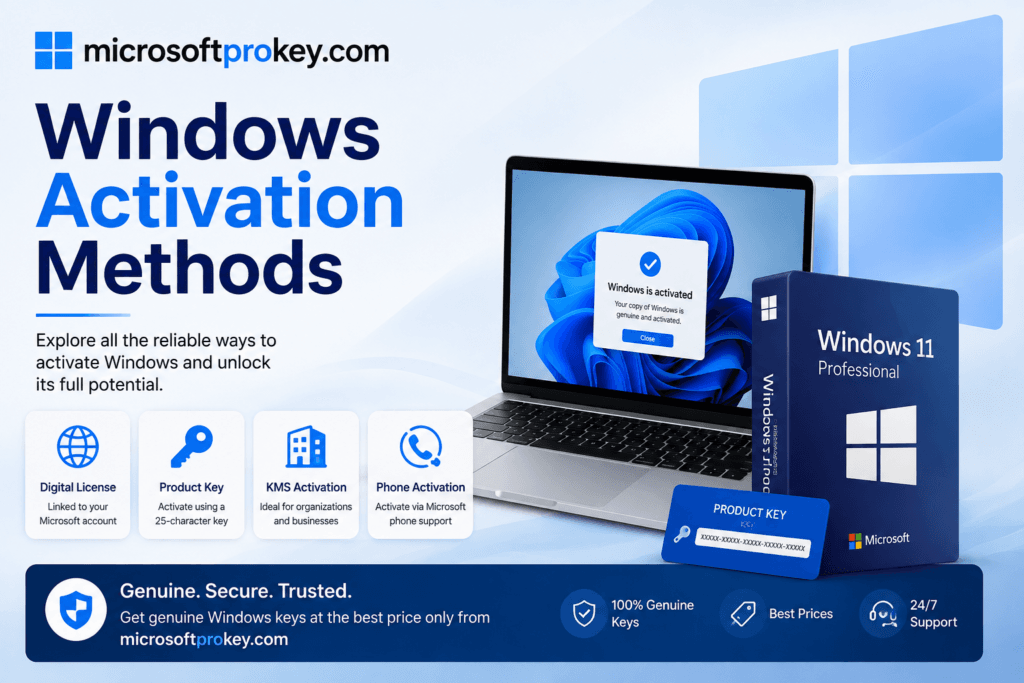
Windows activation is the process that verifies your copy of Windows is genuine. Think of it like a digital ticket for your operating system. When you activate Windows, Microsoft checks your software against their records. This ensures your copy is not pirated or used on too many devices. Many people ignore this step. They think it is not important. But activation unlocks the full potential of your PC. Without it, you face many limits. You see a constant watermark on your screen. You cannot change your wallpaper or themes.
You miss out on important system updates. These updates keep your computer safe from hackers. So activation is not just a formality. It is a necessity for a smooth experience. This guide covers all Windows activation methods. We will explain each one in simple terms. We will help you choose the best option for your needs. Whether you build a new PC or upgrade an old one, this guide is for you. Let us dive into the world of Windows activation methods and find your perfect solution.
The Consequences of Not Activating Windows
Running Windows without activation is possible. But it comes with serious downsides. First, you see the “Activate Windows” watermark. This watermark stays in the bottom right corner. It appears on top of all your apps and games. It is very annoying. Second, you lose personalization features. You cannot change your desktop background. You cannot adjust window colors or themes. Your PC looks bland and unprofessional.
Third, some features get restricted. You might miss security updates. These updates protect against viruses and malware. Over time, your system becomes vulnerable. Fourth, you face legal risks. Using unactivated Windows violates Microsoft’s terms. It is considered software piracy. Finally, your system may become unstable. Some programs might not work correctly. So the cost of not activating is high. You save money now but pay later with frustration. That is why exploring proper Windows activation methods is so important.
Understanding Different Types of Windows Licenses
Before buying a key, know the license types. There are three main categories. Each has different rules and benefits.
Retail Keys are the most flexible type. You buy these from Microsoft or authorized stores. They come in a box or as a digital code. You can transfer a retail key to a new computer. If you upgrade your motherboard, the key still works. This makes retail keys ideal for PC builders.
OEM Keys come pre-installed on new computers. Brands like Dell and HP use them. These keys are tied to the motherboard. You cannot transfer them to another PC. If your motherboard dies, the key is lost. OEM keys are cheaper but less flexible.
Volume License Keys are for large organizations. Businesses and schools use them. IT administrators manage these keys. They are not for individual users.
Each type affects your Windows activation methods. Choose based on your needs and budget.
Retail Keys: The Most Flexible Choice
Retail keys offer the greatest freedom. You buy them directly from Microsoft or trusted retailers. They cost more than other options. But the benefits are worth it. You can move a retail key to any computer. You simply deactivate it on the old machine. Then activate it on the new one. This is perfect for people who upgrade often. Retail keys also come with Microsoft support. If you have problems, you can get help.
These keys are lifetime licenses. You pay once and use forever. There are no subscription fees. Retail keys work with all Windows activation methods. You can activate online or by phone. The process is simple and fast. For most home users, retail is the best choice. It gives you peace of mind. You never worry about losing your license. So consider retail keys for your next purchase.
OEM Keys: The Budget-Friendly Option
OEM keys are much cheaper than retail keys. You can find them for $10 to $30. This low price attracts many buyers. But there are important trade-offs. OEM keys are tied to one motherboard. You cannot transfer them to another PC. If you change your motherboard, you need a new key.
This is a big limitation. OEM keys also lack Microsoft support. You must rely on the seller for help. Some OEM keys come from grey markets. These may stop working after a few months. So you take a risk with cheap OEM keys. However, many users find them satisfactory. If you never upgrade your PC, an OEM key works fine. It is one of the most popular Windows activation methods for budget builds. Just buy from a reputable source. Avoid suspiciously cheap deals. They often lead to problems later.
Volume Licensing: For Businesses Only
Volume licensing is not for individual users. It serves large organizations. Companies with 50 or more computers use this method. Volume licenses come in two forms: KMS and MAK. KMS uses a local server on the network. This server activates all connected computers. The activation lasts for 180 days.
Then it renews automatically. MAK keys are multiple activation keys. Each key works for a set number of installations. Volume licensing is complex. It requires IT expertise. Most home users never need this. But it is good to know it exists. These Windows activation methods are for enterprises only. They are not sold to individuals. So ignore volume licensing if you are a home user. Focus on retail or OEM options instead.
Digital Licenses: The Modern Activation Method
Digital licenses simplify activation. Microsoft introduced them with Windows 10. They link your license to your Microsoft account. You do not need to remember a product key. When you reinstall Windows, it activates automatically. The system checks your hardware and account. This is called HWID activation. It uses a hardware hash. This hash combines your CPU, motherboard, and storage. Microsoft stores this hash on their servers.
When you reinstall, they match the hash. Then they activate your PC. This is one of the easiest Windows activation methods. It works great for people who reinstall often. However, major hardware changes break the link. If you change your motherboard, the digital license may fail. In that case, you need to use the activation troubleshooter. Or you must buy a new key. Digital licenses are free with a valid key. They make activation hassle-free.
How to Activate Windows Step by Step
Activating Windows is straightforward. Follow these simple steps. First, click the Start button. Then open Settings. Go to System and click Activation. Look for the “Change product key” option. Click it and enter your 25-character key. The key looks like XXXXX-XXXXX-XXXXX-XXXXX-XXXXX. Windows connects to the internet. It verifies your key with Microsoft servers. If the key is valid, activation succeeds. You see a confirmation message. Your PC now has full features. You can change wallpapers and themes.
The watermark disappears. You receive all security updates. This process takes only a few minutes. It works for all Windows activation methods. Sometimes online activation fails. Then you can use the phone method. Call the number shown on screen. Follow the automated instructions. Enter the confirmation ID. Your PC activates successfully. So activation is quick and easy.
Buying from Microsoft: The Safest Option
The safest way to get a key is from Microsoft. Visit the official Microsoft Store online. You can also buy through the Microsoft Store app. This method guarantees a genuine key. You avoid all scams and risks. Microsoft charges full price. Windows 11 Pro costs around $199. Home edition is cheaper.
But you get peace of mind. Your key works forever. You can transfer it to new PCs. You receive Microsoft support if needed. The key arrives instantly by email. This is the most reliable of all Windows activation methods. It is perfect for businesses and professionals. The higher cost is worth the security. You never worry about your key being blocked. So if you have the budget, buy from Microsoft directly.
Buying from Authorized Retailers
Authorized retailers are another safe option. These include Amazon, Best Buy, and Newegg. They sell legitimate Windows keys. You can buy boxed copies or digital codes. Boxed copies come with a physical DVD. Digital codes arrive by email. These retailers are trusted partners of Microsoft. Their keys are genuine and legal. Prices are similar to Microsoft’s store. Sometimes you find discounts or bundles. Authorized retailers offer buyer protection. You can return defective products. This makes them a reliable choice. These Windows activation methods are safe and convenient. You avoid the risks of unknown websites. So always check if a retailer is authorized. Look for the Microsoft partner badge. This confirms their legitimacy. Then you can buy with confidence.
Buying from Third-Party Resellers: Pros and Cons
Third-party resellers offer cheaper keys. Sites like Microsoftprokey provide competitive prices. You can save up to 90% off retail prices. This appeals to budget-conscious buyers. But there are risks involved. Some keys are grey market keys. These come from bulk purchases or volume licensing. They are not meant for individual use. Such keys may stop working later. Microsoft can block them for overuse.
So you lose your money and activation. However, reputable resellers are different. They provide genuine OEM keys. These keys work reliably. Microsoftprokey offers lifetime licenses. They have positive customer reviews. Their keys activate directly on Microsoft’s website. So not all resellers are bad. You just need to choose carefully. Look for established platforms with good feedback. Avoid deals that seem too good to be true.
The Dangers of Free Activators and Pirated Tools
Free activators are tempting but dangerous. These include KMS scripts and CMD tools. They claim to activate Windows for free. But they come with severe risks. First, they often contain malware. Hackers bundle viruses with these tools. Your PC gets infected with trojans or keyloggers.
They steal your personal data. Second, these tools abuse enterprise licensing. They trick your computer into thinking it is on a corporate network. This violates Microsoft’s terms. Third, they cause system instability. Modifying core files leads to crashes.
Updates may fail or break your system. Fourth, Microsoft can block these activations. Your PC becomes unactivated again. So free activators are not worth it. They compromise your security and stability. Stick to legitimate Windows activation methods. Your data and peace of mind are precious.
Comparing Windows Activation Methods: Which One Is Right for You?
Choosing the right method depends on your needs. Let us compare the options clearly.
| Method | Cost | Flexibility | Safety | Best For |
|---|---|---|---|---|
| Microsoft Retail | High | High | Very Safe | Professionals |
| Authorized Retailer | High | High | Very Safe | Most Users |
| OEM Key (Reseller) | Low | Low | Moderate | Budget Builds |
| Digital License | Free* | Medium | Safe | Frequent Reinstallers |
| Free Activators | Free | Low | Dangerous | Never Use |
*Digital licenses come with a valid key purchase.
Retail keys offer the best flexibility. OEM keys save money but lock you to one PC. Digital licenses are convenient for reinstalls. Free activators are risky and illegal. Consider your budget and future plans. If you upgrade often, choose retail. If you never change hardware, OEM works. If you reinstall Windows frequently, digital licenses help. Always prioritize safety over savings. The cheapest option often costs more in the long run. So evaluate all Windows activation methods carefully. Make an informed decision.
How to Spot a Fake or Stolen Windows Key
Fake keys are common online. Learn to spot them. First, check the price. If it is under $10, be suspicious. Genuine keys cost more. Second, look at the seller. Unknown websites are risky. Stick to established platforms. Third, read reviews. Look for complaints about keys stopping. Fourth, check the key format. Valid keys have 25 characters. They use letters and numbers. Fifth, verify the license type. Ask if it is retail or OEM.
Retail keys are more valuable. Sixth, avoid keys sold as “volume” or “MAK” for individuals. These are not for personal use. Seventh, test the key immediately after purchase. If it fails, request a refund. Reputable sellers offer guarantees. Microsoftprokey provides support if activation fails. So do your homework before buying. Protect yourself from scams.
Tips for a Smooth Activation Experience
Follow these tips for hassle-free activation. First, buy from trusted sources. Use Microsoft or authorized retailers. Consider reputable resellers like Microsoftprokey. Second, keep your key safe. Store it in a password manager. Write it down physically. Third, link your license to a Microsoft account. This creates a digital license. It makes reactivation easier. Fourth, use the activation troubleshooter if problems occur.
It can fix many issues. Fifth, avoid using the same key on multiple PCs. This violates the license terms. Microsoft may block the key. Sixth, check your license type before upgrading hardware. Retail keys transfer easily. OEM keys do not. Seventh, keep your system updated. Updates sometimes fix activation bugs. These tips work for all Windows activation methods. They ensure a smooth process every time.
Why You Should Always Choose Legal Windows Activation Methods
Legal activation is the only smart choice. It protects your computer and your data. Illegal methods expose you to malware. Hackers target pirated software users. They steal passwords and credit cards. Legal keys come with security updates. These updates patch vulnerabilities. Your system stays safe from attacks. Legal activation also gives you support. Microsoft helps you with problems. Illegal tools offer no help.
You are on your own. Legal keys work permanently. They do not get blocked by Microsoft. Illegal activations can stop anytime. You lose access to features. You face the watermark again. Legal activation is also ethical. It supports software development. Developers deserve payment for their work. So choose legal Windows activation methods. They are safer, more reliable, and morally right. The small cost is worth the huge benefits.
Conclusion: Make the Right Choice for Your PC
Choosing the right Windows activation method is crucial for your PC experience. We have covered all the options in this guide. From retail keys to OEM licenses, each method has its pros and cons. Retail keys offer the most flexibility and support. They are ideal for users who upgrade their hardware often. OEM keys save money but lock you to one motherboard. Digital licenses make reinstallation easy. Free activators are dangerous and illegal. They should never be used. The safest path is buying from Microsoft or authorized retailers. But if you want to save money, choose a reputable reseller.
Microsoftprokey is one such option. They offer genuine keys at competitive prices. Their customer reviews are positive. They provide support if activation fails. Always prioritize safety over savings. A cheap key that stops working costs you more in the long run. You lose time and money. You also risk your data security. So invest in a legitimate license. It gives you peace of mind. You enjoy all Windows features without limits.
You receive important security updates. Your PC runs smoothly and safely. Remember, activation is not just about removing a watermark. It is about protecting your digital life. Choose wisely. Follow the tips in this guide. Make an informed decision. Your computer will thank you. Start your activation journey today. Unlock the full power of Windows. Enjoy a seamless computing experience.
FAQ’s
Q1: What are the most common Windows activation methods?
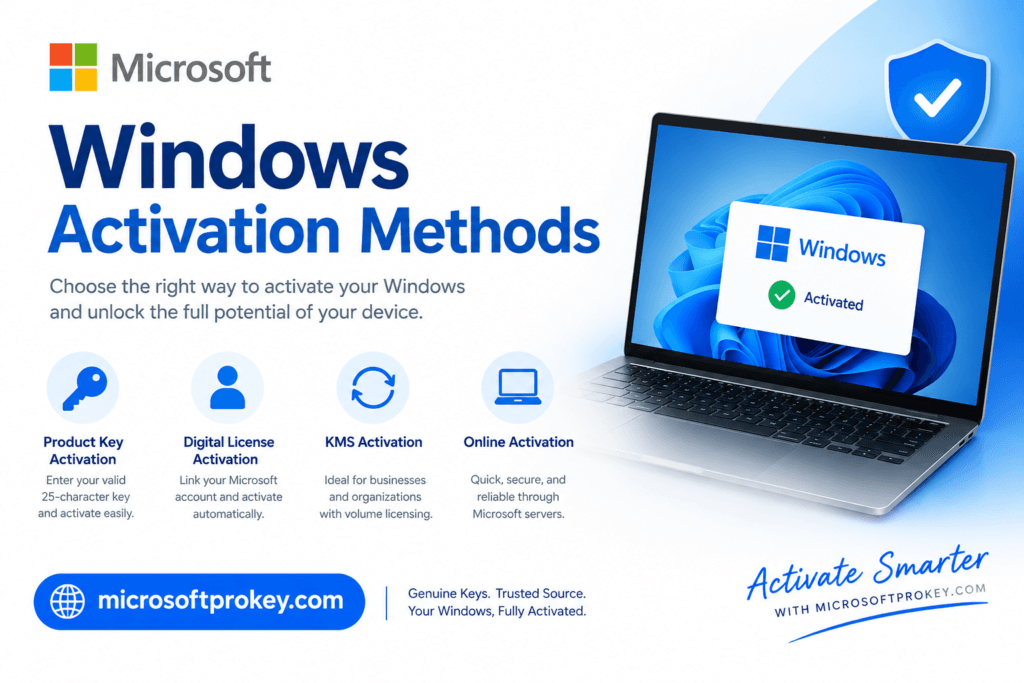
The most common Windows activation methods include using a retail product key, an OEM key, a digital license (HWID), and volume licensing (KMS/MAK). Retail and OEM keys are for individual users. Digital licenses link to your Microsoft account. Volume licensing is for businesses.
Q2: Is it safe to buy cheap Windows keys from third-party websites?
It depends on the seller. Reputable sites like Microsoftprokey offer genuine keys with support. However, many cheap keys come from grey markets. They may stop working later. Always research the seller before buying. Check reviews and verify their legitimacy.
Q3: Can I transfer my Windows license to a new computer?
Yes, but it depends on the license type. Retail keys are transferable. You can move them to a new PC. OEM keys are tied to the original motherboard. They cannot be transferred. Digital licenses can be transferred if linked to your Microsoft account.
Q4: What happens if I use an illegal Windows activator?
Illegal activators carry many risks. They often contain malware that steals your data. They violate Microsoft’s terms of service. They can cause system instability and crashes. Microsoft may also block the activation later. You lose access to features and updates.
Q5: How do I know if my Windows key is genuine?
Genuine keys come from trusted sources like Microsoft or authorized retailers. They have 25 characters. Check the license type in your system settings. Use the command slmgr /dlv to see your license details. If you bought from a suspicious website, the key may be fake.