Introduction
Windows activation is a vital step for every computer user. It confirms that your copy of Windows is genuine. This process also unlocks all the features of the operating system. Without activation, you face many restrictions. You cannot change your desktop background. You also see constant reminders to activate. These reminders are annoying and distracting. Moreover, you miss out on important security updates. These updates protect your computer from viruses and hackers. Therefore, you must activate Windows as soon as possible. However, many people find the process Windows Activation. They do not know which method to choose. This guide simplifies everything for you. We will explain all the Windows Activation Methods clearly. We will also help you pick the right one. Furthermore, we will show you how to save money. Our goal is to make activation easy for everyone. So, let us begin this journey together. You will become an expert in no time.
What Are Windows Activation Methods?
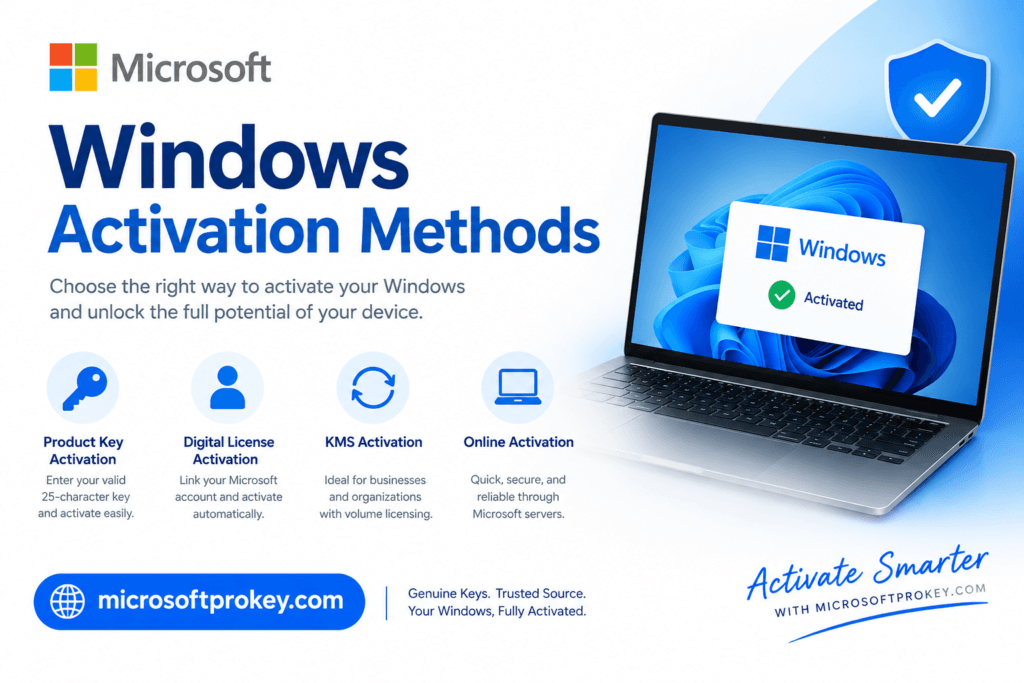
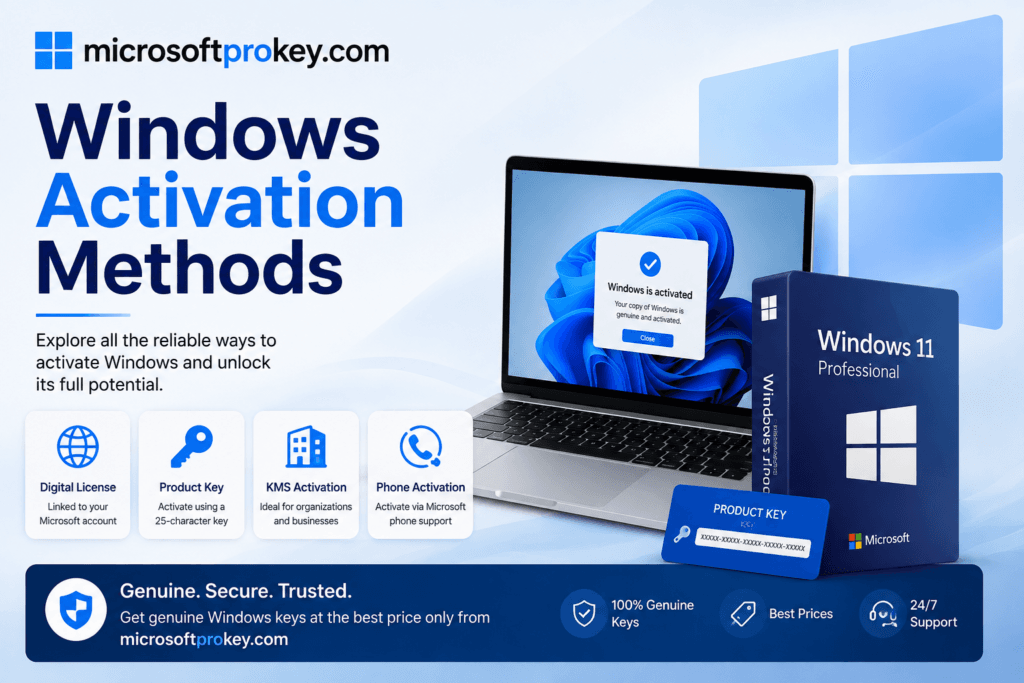
Windows Activation Methods are the different ways to activate your Windows operating system. Basically, they are the paths to verify your software license. Microsoft offers several official methods for activation. Each method serves a different type of user. For example, home users have different needs than businesses. Similarly, large companies require different solutions. The main Windows Activation Methods include OEM activation, retail activation, and volume activation. Additionally, digital licenses and product keys are also common. Each Windows Activation has its own pros and cons. Some methods are cheaper than others. Some are more convenient for specific situations. Understanding these methods is crucial for making a wise choice. It helps you avoid wasting money. It also ensures you stay within legal boundaries. Therefore, we will explore each method in detail. By the end, you will know exactly what suits you best.
OEM Activation: The Pre-Installed Option
OEM stands for Original Equipment Manufacturer. This method applies to computers that come with Windows pre-installed. For instance, Dell, HP, and Lenovo use this method. They install Windows at their factories. The activation key is embedded in the computer’s BIOS. Therefore, you do not need to enter any key manually. The system activates automatically when you connect to the internet. This is one of the simplest Windows Activation Methods. It requires zero effort from the user. However, there is a major catch with OEM licenses. They are tied to the specific motherboard. So, you cannot transfer them to another computer. If your motherboard fails, you lose the license. You must buy a new one for a replacement. Moreover, OEM versions come with limited support. Microsoft does not offer direct assistance for these copies. Instead, you must contact the computer manufacturer. Despite these drawbacks, OEM is very popular. It is also the cheapest option for new computers. Many users prefer it for its convenience and low cost.
Retail Activation: The Flexible Choice
Retail activation is the traditional method for buying Windows. You purchase a boxed copy from a store. Alternatively, you buy a digital key from Microsoft’s website. This key is a 25-character alphanumeric code. You enter this code during installation. The system then verifies it online. This is a straightforward process for most users. Retail licenses offer great flexibility. You can transfer them to different computers. You just need to uninstall it from the old machine first. Then you can install it on a new one. This makes retail one of the most versatile Windows Activation Methods. Additionally, retail versions include Microsoft support. You can contact them directly for any issues. They will help you with activation problems. However, retail licenses are more expensive. They cost significantly more than OEM versions. Yet, many people choose this method for its portability. It is ideal for users who upgrade their PCs often. It also works well for those building their own computers. The peace of mind is worth the extra cost.
Volume Activation: The Business Solution
Volume activation is designed for large organizations. This includes businesses, schools, and government agencies. They need to activate many computers at once. Doing each one individually would be tedious. Therefore, Microsoft offers volume licensing programs. These programs provide special Windows Activation Methods. The two main types are KMS and MAK. KMS stands for Key Management Service. MAK stands for Multiple Activation Key. Both serve the same purpose but work differently. KMS requires a local server in your network. This server handles all activations automatically. Computers connect to it periodically. They renew their activation status every 180 days. This is efficient for large, stable networks. On the other hand, MAK is a one-time activation key. You use it to activate each computer individually. It works well for computers that are offline often. Volume activation is cost-effective for large groups. However, it requires technical expertise to set up. Small businesses may find it too complex. Nonetheless, it remains a popular choice for enterprises.
Digital License: The Modern Approach
A digital license is a newer activation method. It is also called a digital entitlement. This method does not use a traditional product key. Instead, it links your license to your hardware. Microsoft stores this information on their servers. When you reinstall Windows, it activates automatically. You do not need to enter any key. This is one of the most convenient Windows Activation Methods. It is especially useful after major updates. For example, upgrading from Windows 10 to 11. Your digital license carries over seamlessly. This method also works with your Microsoft account. You can link your license to your account. Then, if you change your hardware, you can reactivate. You use the activation troubleshooter for this. It allows you to transfer your license. However, there are limits to this transfer. You cannot do it indefinitely. Microsoft monitors these transfers closely. Despite this, digital licenses are very popular. They offer a hassle-free experience. Many users appreciate the simplicity of this method.
Product Key Activation: The Classic Method
The product key is the most familiar activation method. It is a 25-character code. You usually find it on a sticker or in an email. You enter this key during the installation process. The system then checks its validity online. If the key is genuine, activation is complete. This is a straightforward and reliable method. Many users prefer this traditional approach. Product keys are available for all editions of Windows. You can buy them from various retailers. However, you must be careful about where you buy. Some sellers offer counterfeit keys. These keys may work initially but Windows Activation. Therefore, always purchase from trusted sources. Official Microsoft partners are the safest bet. Product key activation gives you full control. You know exactly what you are getting. It is one of the most transparent Windows Activation Methods. Additionally, you can keep the key for future use. Just remember to deactivate it from old devices. This ensures you stay compliant with Microsoft’s terms.
KMS Activation: For Large Networks
KMS activation is a subset of volume activation. It stands for Key Management Service. This method uses a local server in your network. The server acts as a local activation point. Computers in the network connect to this server. They do not need to go to the internet for activation. This is efficient for large organizations. It reduces the load on Microsoft’s servers. It also speeds up the activation process. To use KMS, you need at least 25 Windows Activation. This is the minimum threshold for activation. The KMS host server must be activated first. Then it can activate other computers. Each client computer must renew its activation every 180 days. This ensures the license remains valid. KMS is one of the most automated Windows Activation Methods. It requires minimal user intervention. However, setting up the server requires technical skills. Network administrators typically handle this. For large companies, KMS is an excellent choice. It saves time and reduces administrative overhead.
MAK Activation: For Offline Computers
MAK activation is another volume licensing method. MAK stands for Multiple Activation Key. This key can activate a set number of computers. The number is predetermined by your license agreement. Each activation uses one count from the total. This method does not require a local server. Instead, each computer connects directly to Microsoft. It activates over the internet or by phone. This makes MAK ideal for offline computers. For example, computers in remote locations. They may not have consistent internet access. MAK also works well for testing environments. These environments often have many virtual machines. The one-time activation is convenient. You do not need to worry about renewal periods. The activation is permanent for that hardware. However, you must manage your key usage carefully. If you exceed the limit, you cannot activate more. You must request additional keys from Microsoft. MAK is one of the flexible Windows Activation Methods. It offers a good balance of control and simplicity.
Active Directory-Based Activation
Active Directory-based activation is a modern method. It integrates with your organization’s Active Directory. This is a directory service used in Windows networks. When a computer joins the domain, it activates automatically. It does not need to contact Microsoft directly. Instead, it uses the domain controller for activation. This is seamless and transparent to the user. The computer must connect to the domain regularly. It needs to renew its activation status every 180 days. This method is very efficient for domain-joined computers. It combines the benefits of KMS and digital licenses. There is no need for a separate KMS server. The domain controller handles everything. This reduces infrastructure complexity. It is one of the most advanced Windows Activation Methods. However, it only works with certain Windows editions. Specifically, Windows 10, 11, and Server editions. It is a great choice for modern businesses. It simplifies activation management significantly.
Phone Activation: The Offline Alternative
Phone activation is a traditional backup method. It is useful when you have no internet. You call Microsoft’s automated phone system. You provide your installation ID. The system gives you a confirmation ID. You enter this ID to complete activation. This process works for all Windows versions. It is a reliable fallback option. Many users do not know about this method. Yet, it is one of the essential Windows Activation Methods. It is especially helpful in remote areas. Or in countries with poor internet connectivity. The phone system is available 24/7. It supports multiple languages. However, the process can be time-consuming. You must follow the voice prompts carefully. You also need to note down long numbers. Despite this, it is a lifesaver in emergencies. It ensures you can activate Windows anywhere. So, always keep this option in mind. It might save you from a frustrating situation.
Windows Insider Program Activation
The Windows Insider Program offers a unique method. It allows users to test pre-release builds. These are early versions of Windows. They are not yet fully stable. However, they are free to use. Joining the program gives you a digital license. This license activates the Insider builds automatically. This is one of the lesser-known Windows Activation Methods. It is great for tech enthusiasts. They get to try new features early. They also help Microsoft by providing feedback. However, there are downsides to this method. The builds can have bugs and issues. They may crash or have performance problems. Also, the license is only for Insider builds. You cannot use it for the stable release. If you leave the program, you lose the Windows Activation. You must then buy a regular license. Therefore, this method is not for Windows Activation. It is best for experienced users. They understand the risks involved.
Microsoft Activation Scripts (MAS)
Microsoft Activation Scripts is a community tool. It is an open-source project on GitHub. It offers various activation options. These include HWID, KMS38, and Online KMS. HWID provides permanent activation. It links your license to your hardware. KMS38 activates until the year 2038. This is a very long period. Online KMS activates for 180 days. This tool is popular among tech-savvy Windows Activation. However, it is not officially supported by Microsoft. Using it may violate the terms of service. It is meant for educational purposes only. Despite this, many people use it successfully. It is one of the controversial Windows Activation Methods. Some consider it a gray area. Others view it as a helpful resource. We do not recommend using unofficial tools. They can compromise your system’s security. They may also stop working after updates. It is always safer to use official methods. Your data and peace of mind are Windows Activation.
How to Choose the Right Method
Choosing the right method depends on your needs. First, consider your budget. OEM is the cheapest option. Retail is more expensive but flexible. Second, think about your usage. Do you change computers often? If yes, retail or digital license is best. Third, consider your technical skills. Volume activation requires expertise. Product key activation is user-friendly. Fourth, evaluate your network environment. Large networks benefit from KMS. Small networks can use MAK. Fifth, check your internet connectivity. Offline users should consider phone activation. Sixth, think about future upgrades. Digital licenses carry over easily. Product keys may need reactivation. Seventh, consider support needs. Retail includes Microsoft support. OEM support comes from the manufacturer. By weighing these factors, you can decide. There is no one-size-fits-all answer. Each user has unique requirements. Take your time to evaluate your options. This ensures you make the best choice.
Cost Comparison of Windows Activation Methods
Cost is a major factor for most users. OEM licenses are the most affordable. They cost around $100 to $150. Retail licenses are more expensive. They range from $140 to $200. Volume licensing costs vary widely. It depends on the number of licenses. Larger volumes get better discounts. Digital licenses are often free. This is if you already have Windows 10. The upgrade to Windows 11 is free. Product keys from third-party sites are cheaper. However, they come with risks. Some are stolen or counterfeit. These keys may be revoked later. So, you must be cautious. KMS and MAK are part of volume licensing. They have upfront costs for the server. But they save money in the long run. Phone activation does not cost extra. It is a free service from Microsoft. The Windows Insider Program is also free. But it comes with stability trade-offs. Overall, OEM is the best value for most. Retail offers the best flexibility. Volume licensing is best for Windows Activation.
Where to Buy Genuine Windows Keys
Buying genuine keys is crucial for safety. You should only buy from authorized sources. The Microsoft Store is the safest option. They sell digital keys directly. You get instant delivery via email. Major retailers like Amazon are also reliable. They sell boxed copies and digital keys. However, you must check the seller’s reputation. Some third-party sellers are not trustworthy. They may sell fake or stolen keys. These keys can be deactivated anytime. This leaves you with an unactivated system. You lose your money and your time. Therefore, we recommend Microsoftprokey for great deals. They offer genuine keys at competitive prices. Their keys work perfectly for all Windows versions. They also provide excellent customer support. You can visit their website at https://microsoftprokey.com/. They have a wide selection of products. Their prices are affordable for everyone. So, you can save money without compromising quality. Always prioritize safety over savings. A genuine key is an investment in your security.
Conclusion
In conclusion, choosing the right Windows Activation Methods is essential for every user. You have many options to consider. Each method has its unique benefits and drawbacks. OEM activation is cheap and convenient. It comes pre-installed on new computers. Retail activation offers great flexibility. You can transfer it between devices. Volume activation is perfect for large organizations. It saves time and money on bulk purchases. Digital licenses provide a modern, hassle-free experience. They activate automatically with your Microsoft account. Product keys remain a classic and reliable choice. KMS and MAK serve specific business needs. Phone activation is a useful backup method. The Windows Insider Program offers free access to test builds. However, it comes with stability risks. Unofficial tools like MAS are not recommended. They can compromise your security and Windows Activation.
Ultimately, your choice depends on your budget, usage, and technical skills. Consider your specific needs carefully. Do not rush into a decision. Take the time to evaluate each option. This ensures you get the best value for your money. Remember, a genuine Windows license is a worthwhile investment. It protects your computer from security threats. It also gives you access to all features and updates. You avoid the frustration of constant activation reminders. You also support Microsoft’s continued development. For the best deals on genuine keys, check out Microsoftprokey. They offer affordable and authentic products. Their website is easy to use. Their customer service is responsive and helpful. So, make the smart choice today. Activate your Windows with confidence and peace of mind.
FAQs
1. What is the easiest Windows Activation Method for beginners?
The easiest method is OEM activation. It comes pre-installed on new computers. You do not need to do anything. The system activates itself automatically. Digital licenses are also very easy. They link to your Microsoft account. They activate without any manual input.
2. Can I use Windows without activating it?
Yes, you can use Windows without activation. However, you face many restrictions. You cannot change your desktop background. You also see constant activation reminders. You may miss out on important security updates. So, activation is highly recommended.
3. How do I check my Windows activation status?
You can check your status easily. Go to Settings > System > Activation. You will see your activation status there. Alternatively, you can use the Command Prompt. Type “slmgr /xpr” to see your expiration date. This works for all Windows versions.
4. Is it legal to use third-party activation tools?
No, it is not legal. Third-party tools violate Microsoft’s terms. They are considered software piracy. Using them can lead to legal issues. They may also contain malware. This can harm your computer and data. Always use official Windows Activation Methods.
5. Can I transfer my Windows license to a new computer?
Yes, you can transfer retail licenses. You must uninstall it from the old computer first. Then you can install it on the new one. OEM licenses are tied to the original motherboard. They cannot be transferred. Digital licenses can be transferred with your Microsoft account. You use the activation troubleshooter for this.